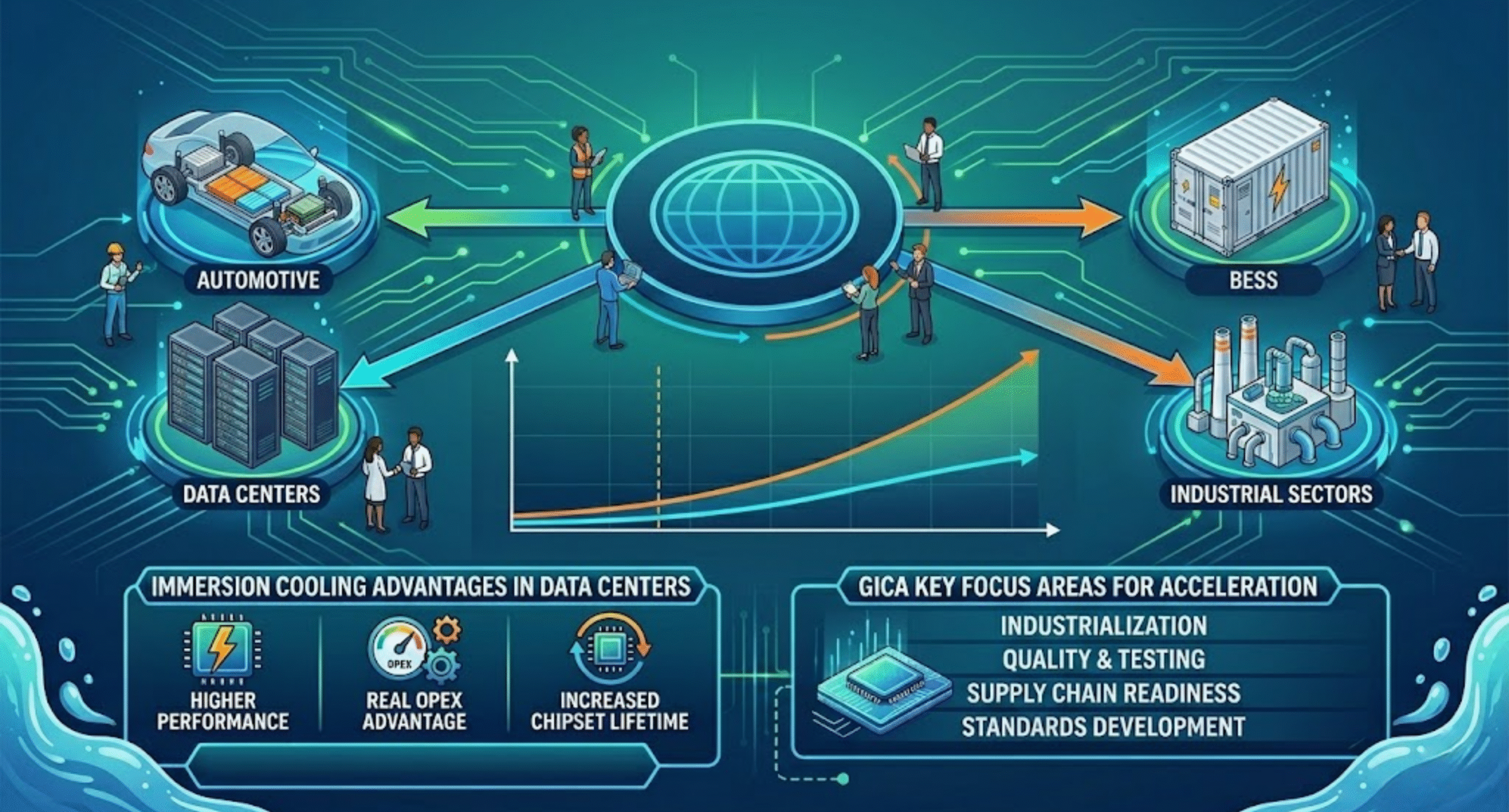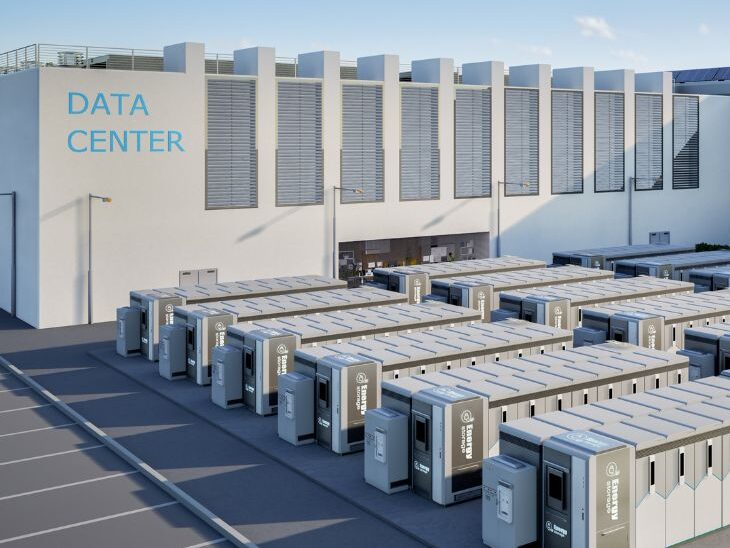



Advanced Thermal Management: Automotive EVs, Battery Energy Storage Systems, and Data Centers/HPC
Thermal management has transitioned from a peripheral engineering task to a mission-critical discipline across electrified transportation, grid-scale energy storage, and hyperscale computing. The convergence of high energy density systems, fast-charging protocols, and AI-driven workloads demands multi-domain thermal strategies that combine advanced materials, predictive algorithms, and integrated architectures.
“The present is theirs; the future, for which I really worked, is mine.” — Nikola Tesla

1. Automotive EV Thermal Management
Why It’s Critical
EV propulsion systems introduce distributed heat sources:
- Traction Battery Packs: Operate within 20–40 °C; deviations risk thermal runaway.
- Power Electronics: SiC MOSFET inverters peak at 85–105 °C; sensitive to cycling.
- Electric Motors: Rotor/stator insulation degradation above 180 °C.
- Cabin HVAC: Heat pumps compete for energy with traction systems.
Technical Innovations
- Integrated Thermal Management Systems (ITMS)
Replace fragmented loops with unified architectures using multi-port valves, heat exchangers, and smart controllers. Tesla’s Octovalve demonstrates dynamic heat routing, improving range by 18%. - Liquid Microchannel Cooling
Achieves ΔT < 5 °C at 5C discharge rates (Tesla glycol-water systems). - Hybrid PCM + Liquid Cooling
Volkswagen and BYD reduce peak temperatures by 17.7 °C; nano-enhanced PCMs boost conductivity by 42%. - Immersion Cooling
Dielectric fluids deliver uniform heat removal, cutting peak temperatures by 28%. - AI-Driven Predictive Control
Machine learning algorithms optimize coolant flow and heat pump operation for 15–20% energy savings.
Future Outlook: Solid-state batteries and ultra-fast charging (>350 kW) will require two-phase cooling and structural thermal integration at the cell-to-chassis level.
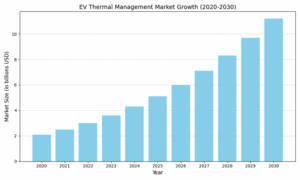
Fig. 1: EV Thermal Management Market
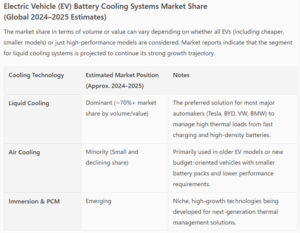
Table. 1.1: EV Thermal Technology Mix
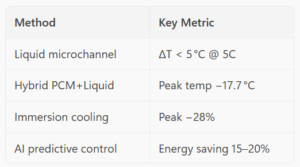
Table 1.2: EV Thermal Methods – Metrics
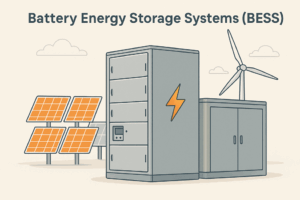
2. Battery Energy Storage Systems (BESS)
Thermal Challenges
- High C-Rate Cycling in grid applications accelerates heat generation.
- Large Pack Geometry introduces thermal gradients impacting cell aging.
Emerging Solutions
- Liquid Cooling Plates for uniform temperature distribution.
- Two-Phase Immersion Cooling for high-power density modules.
- Hybrid Energy Storage Systems (HESS) integrating metal hydride tanks for thermal buffering.
- Digital Twin + AI Predictive Cooling for pre-conditioning during peak demand windows.
Market Projection: Global BTMS for stationary storage will grow from $3.7 B (2024) to $8.5 B (2030), CAGR 14.7%.
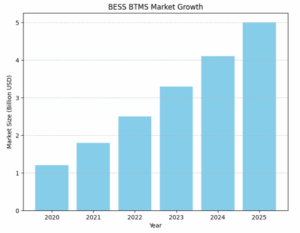
Fig. 2: BESS BTMS Market Growth
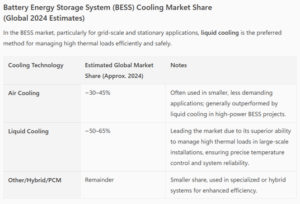
Table. 2.1: BESS Cooling Technology Mix
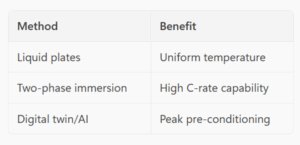
Table 2.2: BESS Cooling Benefits

3. Data Centers & HPC
Thermal Density Explosion
AI and HPC workloads push rack power beyond 100 kW, making air cooling insufficient.
Advanced Cooling Architectures
- Direct-to-Chip Liquid Cooling
Cold plates with CDU integration dominate mainstream adoption (~72%). - Two-Phase Cooling
Refrigerant-based systems for ultra-high heat flux zones (~19%). - Immersion Cooling
Still niche (~9%), primarily in HPC/AI clusters; dielectric fluids enable uniform heat removal but face integration and cost barriers.
Key Trend: Modular CDU systems with predictive thermal analytics reduce PUE by up to 0.15 points, cutting OPEX significantly.
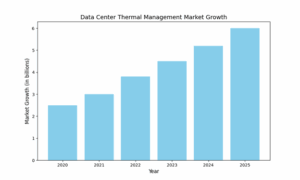
Fig. 3: Data Center Thermal Management Market Growth
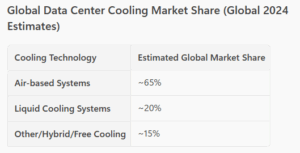
Table. 3.1: Data Center Cooling Adoption
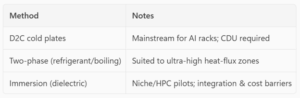
Table 3.2: Data Center Cooling – Notes
Conclusion
Thermal management has become a cornerstone of performance, safety, and efficiency across automotive EVs, battery energy storage systems, and data centers/HPC. As energy densities rise and computational loads surge, traditional cooling methods are no longer sufficient. The industry is moving toward integrated architectures, advanced materials, and AI-driven predictive control to maintain thermal stability under extreme conditions.
Key takeaways:
- Automotive EVs: Liquid microchannel cooling and hybrid PCM systems dominate, while immersion remains niche but promising for ultra-fast charging and high-performance platforms.
- BESS: Liquid plates are the standard, with two-phase immersion and digital twin strategies emerging for high C-rate and grid-scale reliability.
- Data Centers/HPC: Direct-to-chip liquid cooling leads adoption, complemented by two-phase systems for high heat flux zones; immersion cooling is still limited to specialized HPC and AI clusters.
The trajectory is clear: thermal management is evolving from a passive safeguard to an active enabler of innovation. Future systems will integrate smart thermal networks, phase-change materials, and predictive analytics, ensuring sustainability and resilience in electrified mobility, renewable energy storage, and high-density computing.
References:
- Growth Market Reports. (2024). Data Center Thermal Management Market Size, Share & Trends, 2024–2033.
- MarketsandMarkets. (2024). Battery Thermal Management System Market by Technology, Application, and Region – Global Forecast to 2030.
- IDTechEx. (2025). Immersion Cooling for EV Batteries: Market Forecast and Technology Analysis.
- Tesla Inc. (2024). Integrated Thermal Management Architecture for Electric Vehicles. Technical white paper.
- Volkswagen AG. (2024). Hybrid Cooling Strategies for High-Performance EV Platforms. R&D publication.
- BYD Co. Ltd. (2024). Phase Change Material Integration in EV Battery Packs. Engineering report.
- Submer Technologies. (2025). Immersion Cooling Solutions for Data Centers and HPC. Technical brief.
- Vertiv Group Corp. (2025). Direct-to-Chip Liquid Cooling Adoption Trends in Hyperscale Data Centers. Industry insights.
- International Energy Agency. (2024). Grid-Scale Battery Storage and Thermal Management Challenges.
- IEEE Transactions on Components, Packaging and Manufacturing Technology. (2025). Advances in Two-Phase Cooling for High-Density Electronics.
- Gartner Research. (2025). AI Workload Impact on Data Center Cooling Strategies.
- SAE International. (2024). Thermal Management in Electric Vehicles: Standards and Best Practices. SAE technical paper.