


-
Introduction: The Convergence of Power and Heat
Data centers are increasingly the backbone of the digital economy from cloud storage to AI training workloads. In 2026, data center electricity use continues to accelerate sharply, driven by high-performance computing, AI, and 24/7 uptime requirements. Traditional grid power is under stress, and cooling systems often consuming up to 40% of total data center energy are no longer adequate using conventional air-based approaches.
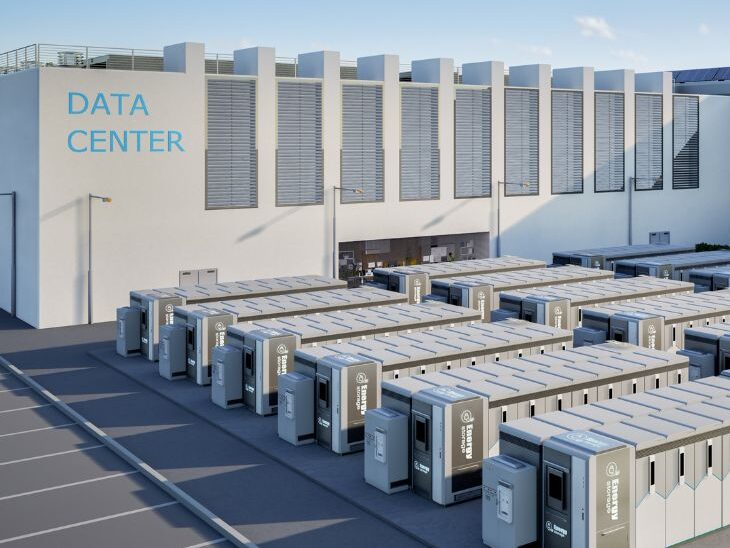
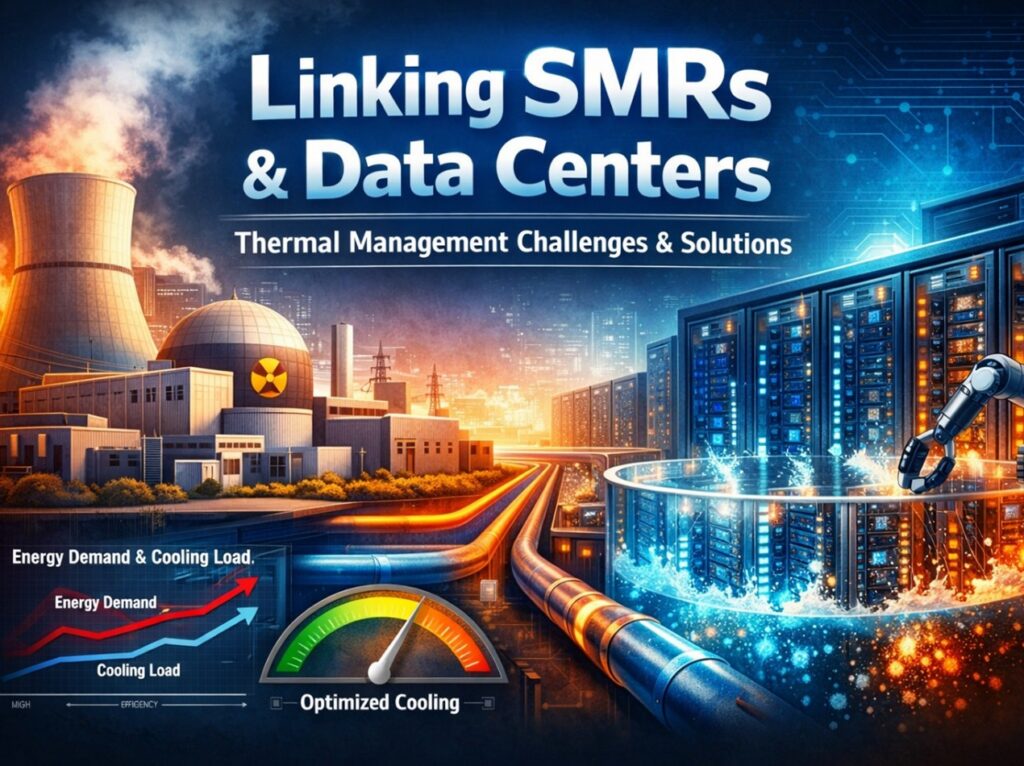
At the same time, Small Modular Reactors (SMRs) are emerging as a scalable, reliable, and low-carbon electricity source that could be co-located with or adjacent to data centers to meet their substantial energy and thermal needs.
Fig. 1.1: SMR and Data Centers.
-
What Are SMRs?
SMRs are compact nuclear fission power plants that typically generate up to 300 MW per module, with designs allowing factory fabrication, modular deployment, and phased scaling.
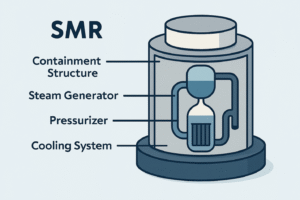
Fig. 2.1: SMR.
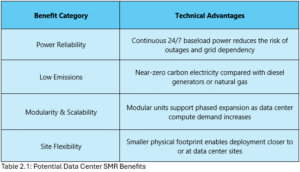
Unlike traditional large plants, SMRs can (1) be installed incrementally, (2) provide dependable baseload power for mission-critical loads, and (3) reduce dependence on external grids, a key advantage for data centers seeking resilience.
Potential Data Center SMR Benefits
-
Why SMRs Make Sense for Data Centers
3.1 Energy & Growth Demands
Global data center electricity demand is expected to more than double by 2030, with AI workloads as the dominant driver.
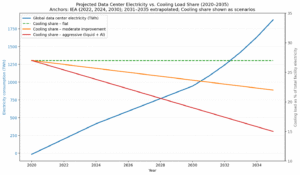
Fig. 3.1: Projected Data Center Electricity vs. Cooling Load Share.
3.2 Thermal Management Requirements
In modern data centers:
- High server densities generate substantial heat loads.
- Traditional air cooling becomes inefficient as compute per rack increases.
- Liquid cooling (direct or immersion) is now being adopted because it can be ≈3,000× more effective than air at removing heat.
3.3 SMR Co-Location Opportunities
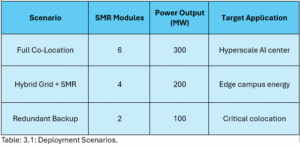
Engineering teams are exploring co-location of data centers and SMRs to:
- Reduce transmission losses and grid bottlenecks.
- Enable the use of waste heat for absorption cooling or district energy systems.
- Integrate power and cooling design from the ground up.
-
Thermal Challenges in SMR-Data Center Integration
Although SMRs can supply reliable power, thermal system integration isn’t trivial:
4.1 Shared Cooling Infrastructure Hurdles
SMRs and data centers both require robust heat rejection systems, towers, chillers, dry coolers which must be sized and controlled for peak combined loads. Mismanagement can lead to inefficiencies or oversizing.
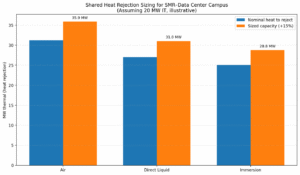
Fig. 4.1: Shared Heat Rejection Sizing (MWth).
4.2 Hydraulic & Control Coordination
Coordinating coolant loops, pump sequencing, and thermal mass flows between the nuclear side and data center side requires:
- Advanced control logic.
- Predictive modeling of heat rejection under variable compute loads.
- Redundancy for safety and uptime.
This creates a classic systems-engineering challenge where reactor cooling and IT cooling systems must be tightly coupled without compromising nuclear safety margins.
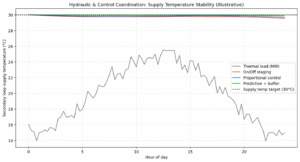
Fig. 4.2: Hydraulic & Control Coordination: Supply Temperature Stability.
4.3 Environmental & Regulatory Constraints
- SMRs must meet nuclear-grade thermal criteria in heat rejection design and environmental permitting.
- In arid regions, hybrid or dry cooling may be essential adding complexity.
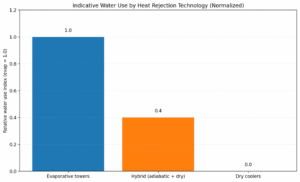
Fig. 4.3: Water Use by Heat‑Rejection Technology (Normalized).
-
Solutions & Future Directions
5.1 Advanced Liquid Cooling
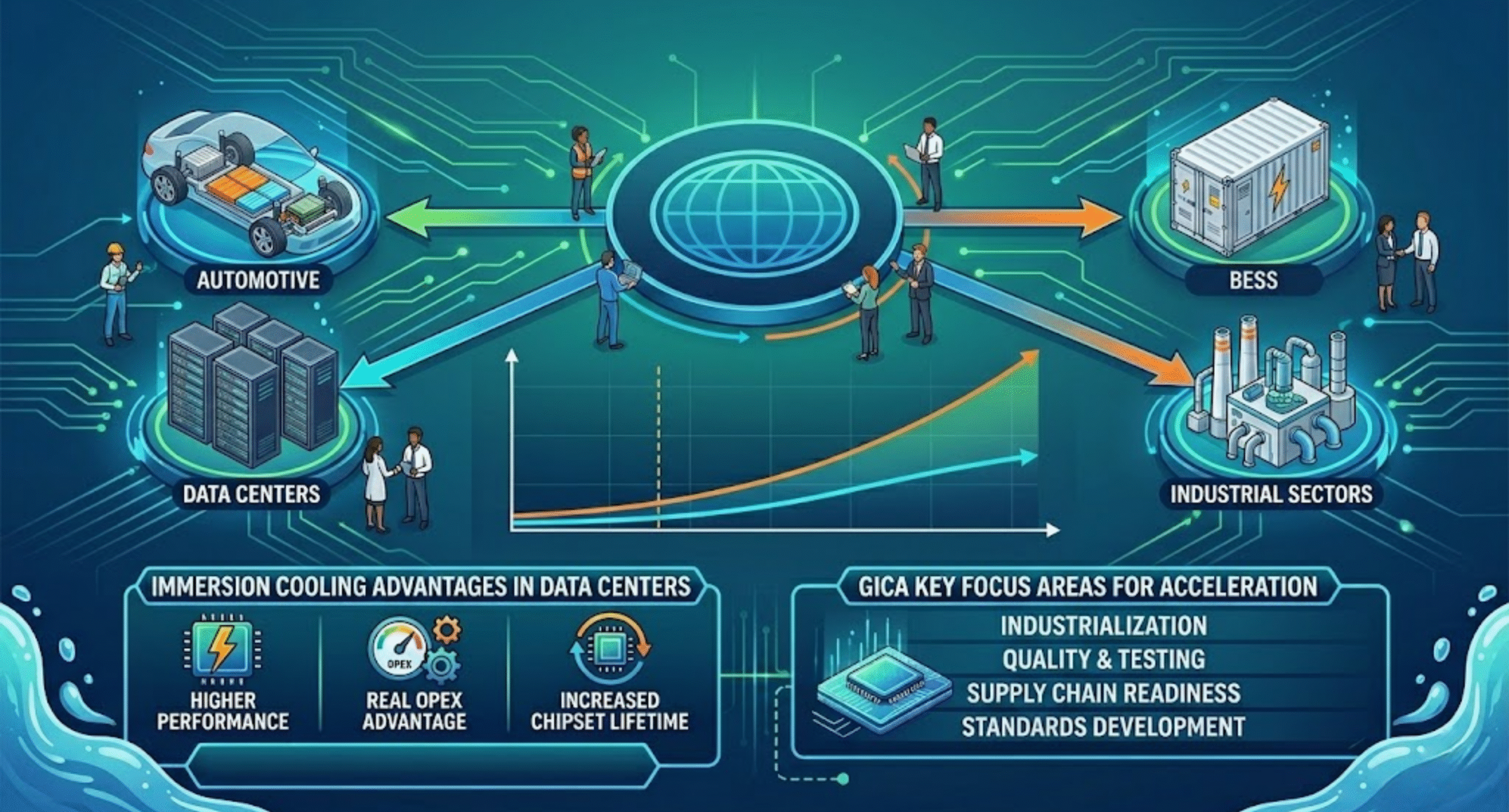
Data centers are increasingly deploying liquid cooling and exploring immersion models, which maintain tight control over component temperatures and reduce cooling energy waste. Utilizing SMR waste heat for absorption chiller cycles can further improve system efficiency.
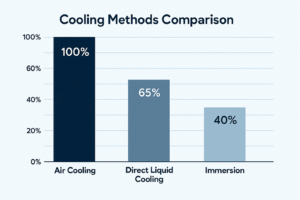
Fig. 5.1: Relative to air cooling as a 100% baseline, direct liquid cooling reduces cooling power demand to roughly 65%, while immersion cooling reduces it further to about 40%, significantly lowering parasitic loads and aligning well with SMR‑powered data center architectures.
5.2 AI-Assisted Thermal Management
AI and ML can optimize coolant loops, pump speeds, and valve settings in real time minimizing power use while maintaining thermal safety margins. Research shows up to 96% of cooling inefficiencies can be reclaimed with advanced control strategies.

Fig. 5.2: Data Center Cooling Efficiency Comparison.
5.3 Modular & Redundant Designs
Building modular heat rejection systems that can be expanded as compute demand increases allows operators to avoid costly over-design up front.
-
How Immersion Cooling Addresses SMR–Data Center Thermal Management Challenges
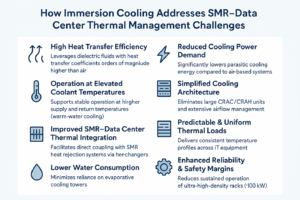
Fig. 6.1: Immersion Cooling and SMR-Data Center Thermal Management.
- High Heat Transfer Efficiency
- Immersion cooling leverages dielectric fluids with heat transfer coefficients orders of magnitude higher than air.
- Enables rapid heat removal from high-power-density compute systems and AI accelerators.
- Operation at Elevated Coolant Temperatures
- Supports stable operation at higher supply and return temperatures (warm-water cooling).
- Aligns naturally with SMR secondary-loop thermal profiles, reducing the need for aggressive chilling.
- Improved SMR–Data Center Thermal Integration
- Facilitates direct coupling with SMR heat rejection systems via heat exchangers.
- Enables efficient waste-heat recovery pathways, including absorption chillers and low-grade heat reuse.
- Reduced Cooling Power Demand
- Significantly lowers parasitic cooling energy compared to air-based systems.
- Improves overall facility PUE and reduces peak electrical demand on SMR modules.
- Simplified Cooling Architecture
- Eliminates large CRAC/CRAH units and extensive airflow management.
- Reduces hydraulic and mechanical complexity in shared cooling infrastructure.
- Lower Water Consumption
- Minimizes reliance on evaporative cooling towers.
- Particularly beneficial for SMR–data center campuses in water-constrained regions.
- Predictable & Uniform Thermal Loads
- Delivers consistent temperature profiles across IT equipment.
- Enhances SMR thermal-hydraulic modeling accuracy and control stability.
- Enhanced Reliability & Safety Margins
- Reduces thermal hotspots and component temperature excursions.
- Supports tighter operational control margins without compromising nuclear safety requirements.
- Strategic Enabler for High-Density Compute
- Enables sustained operation of ultra-high-density racks (>100 kW).
- Positions immersion cooling as a foundational technology for reactor-adjacent, AI-driven data centers.
-
Conclusion
The coupling of SMRs with high-density data centers presents a strategic energy and thermal management opportunity. While SMRs are not yet widely deployed, they are gaining traction with major tech firms and startup initiatives as both power and cooling demands escalate.
The future will require integrated engineering across reactors, cooling hardware, and AI-based thermal control algorithms and advanced solutions such as immersion cooling to achieve resilient, safe, and energy-efficient data center campuses.
-
References
Zhang, et al., “Performance improvement of high‑density data center via two‑phase liquid immersion cooling,” Journal of Thermal Analysis and Calorimetry, vol. 150, pp. 4279–4294, Feb. 2025.
Optimization of data‑center immersion cooling using liquid air energy storage, Journal of Energy Storage, vol. 90, 111806, Jun. 2024.
Experimental study on the immersion liquid cooling performance of high‑power data center servers, Energy, vol. 297, 2024.
You, Z., Wang, J., Ling, J., et al., “Dynamic equilibrium mechanism: Integrating small modular reactors and optimized cooling for sustainable data centers,” Annals of Nuclear Energy, vol. 224, Dec. 2025.
Enough hot air: the role of immersion cooling, Energy Informatics, 2023.
“Thermal design and analysis of a floating small modular reactor and wind system for a sustainable community with floating data center,” Thermal Science and Engineering Progress, vol. 61, 103561, May 2025.
Liquid cooling of data centers: A necessity facing challenges, Applied Thermal Engineering, vol. 247, 123112, Jun. 2024.
Schuett, L‑R., “Thermal Management for Data Centers 2025‑2035: Technologies, Markets, and Opportunities,” IDTechEx report, Dec. 20, 2025.
Small Modular Reactors (SMRs): Third Edition SMR Dashboard, Nuclear Energy Agency (NEA), OECD, Sep. 5, 2025 (global design, deployment, and energy considerations).
Lu, J., “Small Modular Reactors: A Viable Path to Sustainable Data Centers in the Age of Artificial Intelligence,” The Frontiers of Society, Science and Technology, vol. 6, no. 11, 58–62, 2024 (SMR adoption for data center energy).